
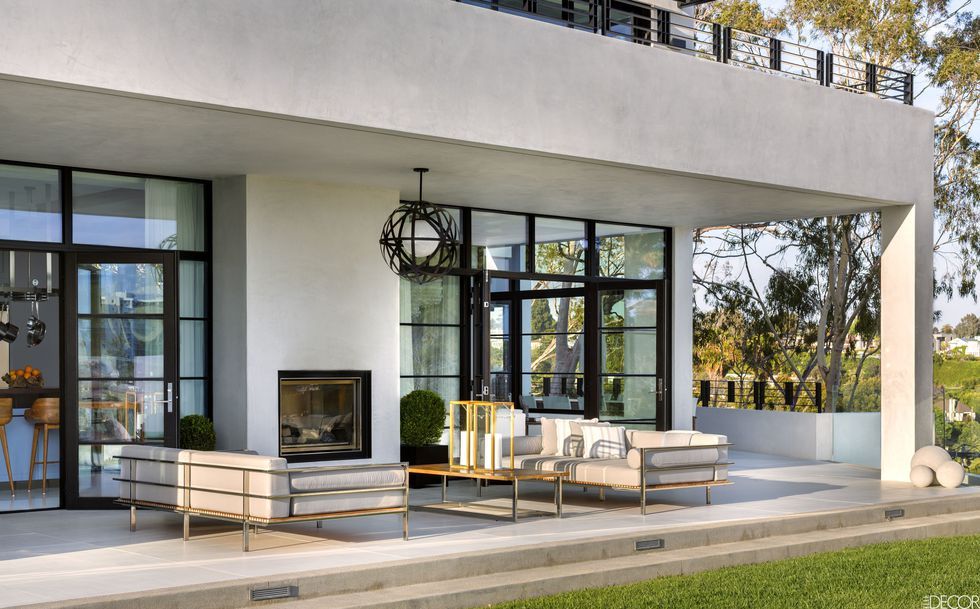
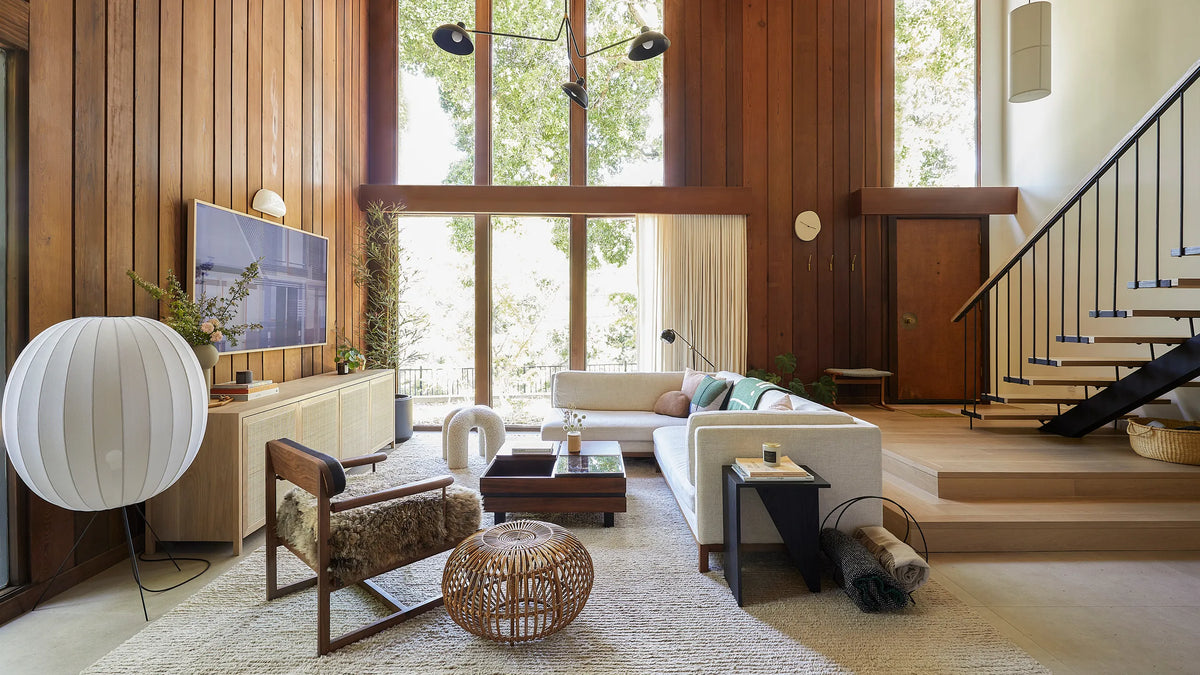
Japandi interiors feel quiet without feeling empty. Natural wood, linen, paper, stone and softly imperfect surfaces replace unnecessary decoration, while lighting becomes part of the architecture rather than an afterthought.
Today, Japandi describes the meeting of Japanese and Scandinavian design principles. The name is contemporary, but the exchange between Japanese and Nordic design is much older. Danish designers studied Japanese craftsmanship, proportion, joinery and the use of natural materials long before the word Japandi became popular in interiors.
Where Japandi lighting comes from
Traditional Japanese interiors often use filtered, indirect light. Paper, timber and translucent surfaces soften illumination instead of exposing a harsh source. Scandinavian interiors developed under very different climatic conditions, yet share several compatible ideas: functional objects, honest materials, craftsmanship, warmth and an emphasis on comfortable light.
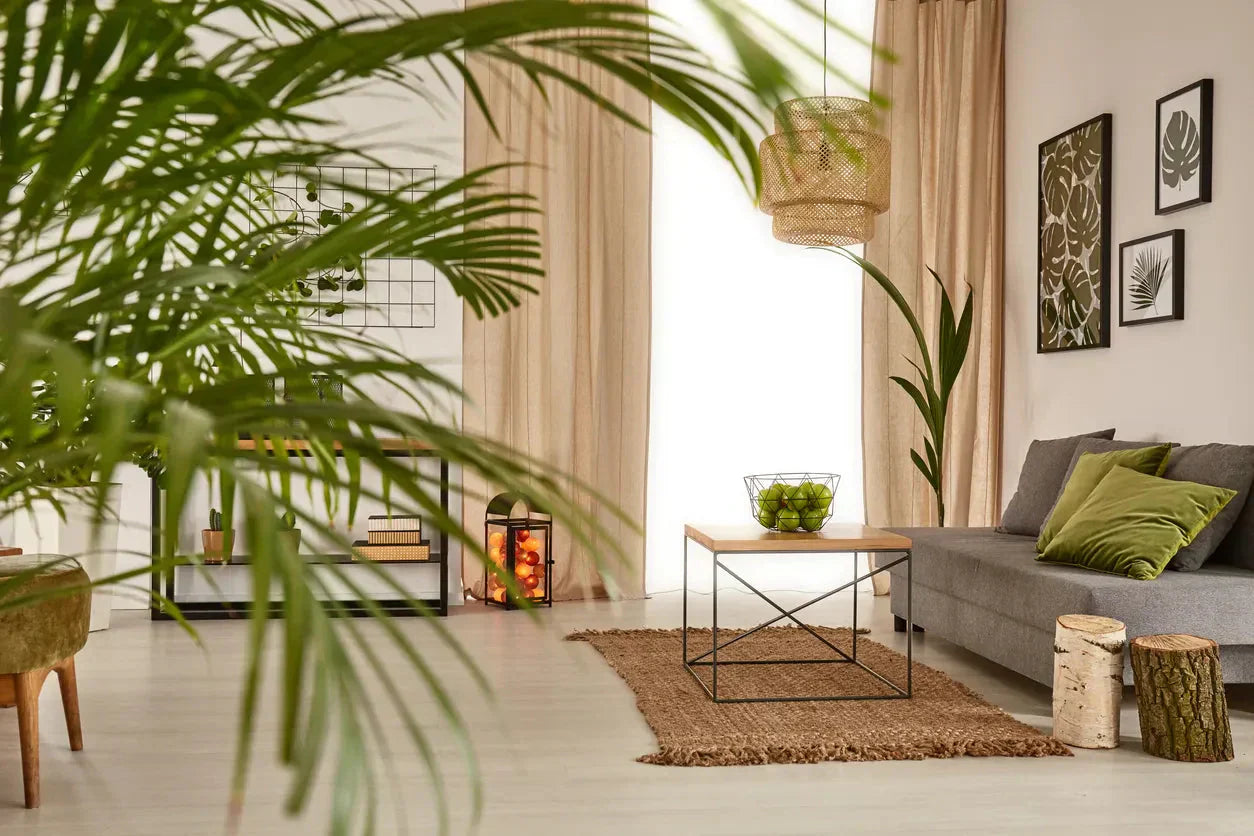
When these traditions meet, the result is lighting with a restrained silhouette, natural texture and warm diffusion. Typical materials include washi paper, linen, bamboo, wood, rattan, alabaster, ceramic and brushed metal.
Isamu Noguchi and the modern paper lamp
No discussion of Japanese-influenced modern lighting is complete without Isamu Noguchi. In 1951, after visiting Gifu in Japan, Noguchi began developing his Akari light sculptures using traditional washi paper and bamboo construction. He transformed the familiar Japanese lantern into a modern sculptural object that could sit naturally in both Eastern and Western interiors.
That influence remains visible today in oversized paper pendants, spherical lanterns, organic suspended forms and softly glowing fixtures that prioritize atmosphere over ornament.
Architects and designers connected to the Japandi design lineage
There is no historically accurate list of “all architects who used Japandi lamps,” because Japandi is a recent label rather than a single historic movement. However, several architects and designers are important to the Japanese–Scandinavian design exchange or to the development of the lighting language now associated with Japandi.
- Isamu Noguchi — sculptor and designer whose Akari light sculptures brought Japanese paper-lantern techniques into modern design.
- Arata Isozaki — Japanese architect who collaborated with Noguchi and helped place Akari within architectural and exhibition settings.
- Hans J. Wegner — Danish designer whose work reflects a deep respect for Japanese craftsmanship, joinery and restraint.
- Børge Mogensen — Danish designer associated with functional, natural-material interiors that align closely with the values now described as Japandi.
- Poul Kjærholm — Danish designer known for disciplined forms, material honesty and architectural simplicity.
- Snorre Stephensen and Gertrud Vasegaard — part of the broader Danish design dialogue with Japanese craft traditions.
Rather than treating Japandi as a strict historical category, it is more useful to see it as a contemporary continuation of this long exchange: Japanese restraint and sensitivity to nature meeting Scandinavian warmth and functionalism.
The materials that make a lamp feel Japandi
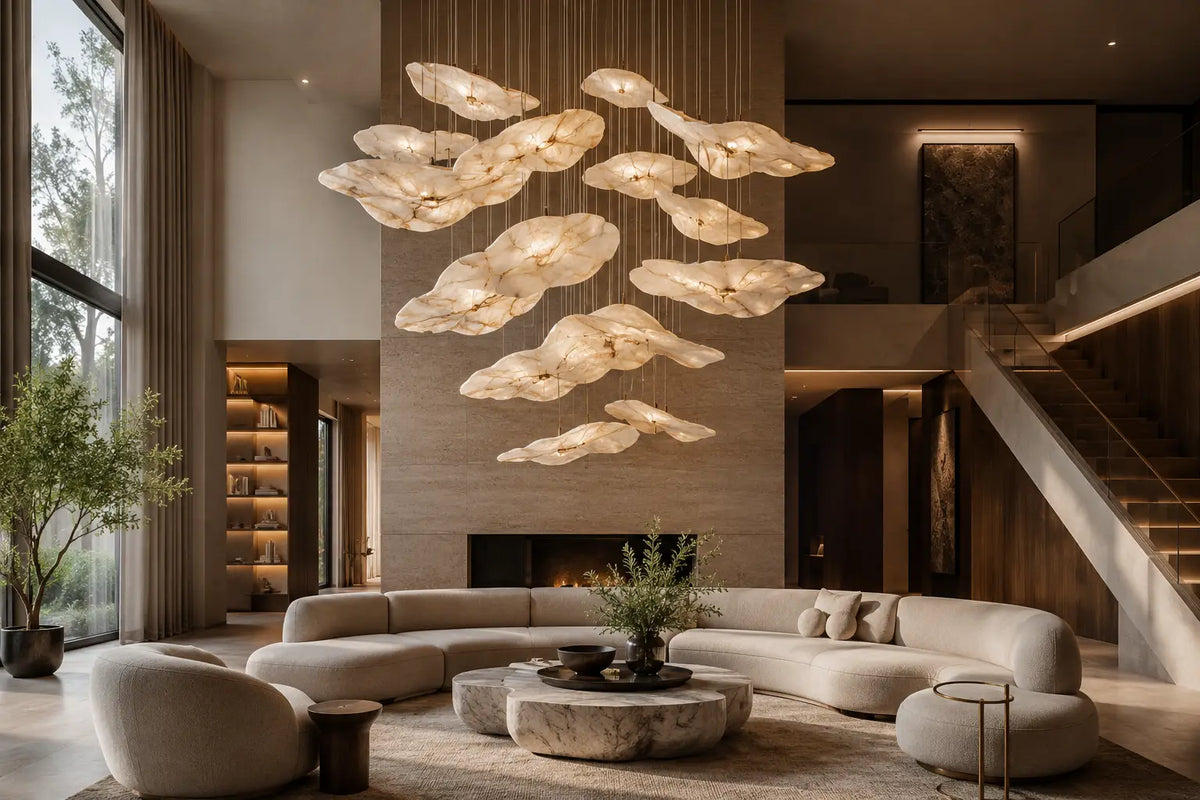
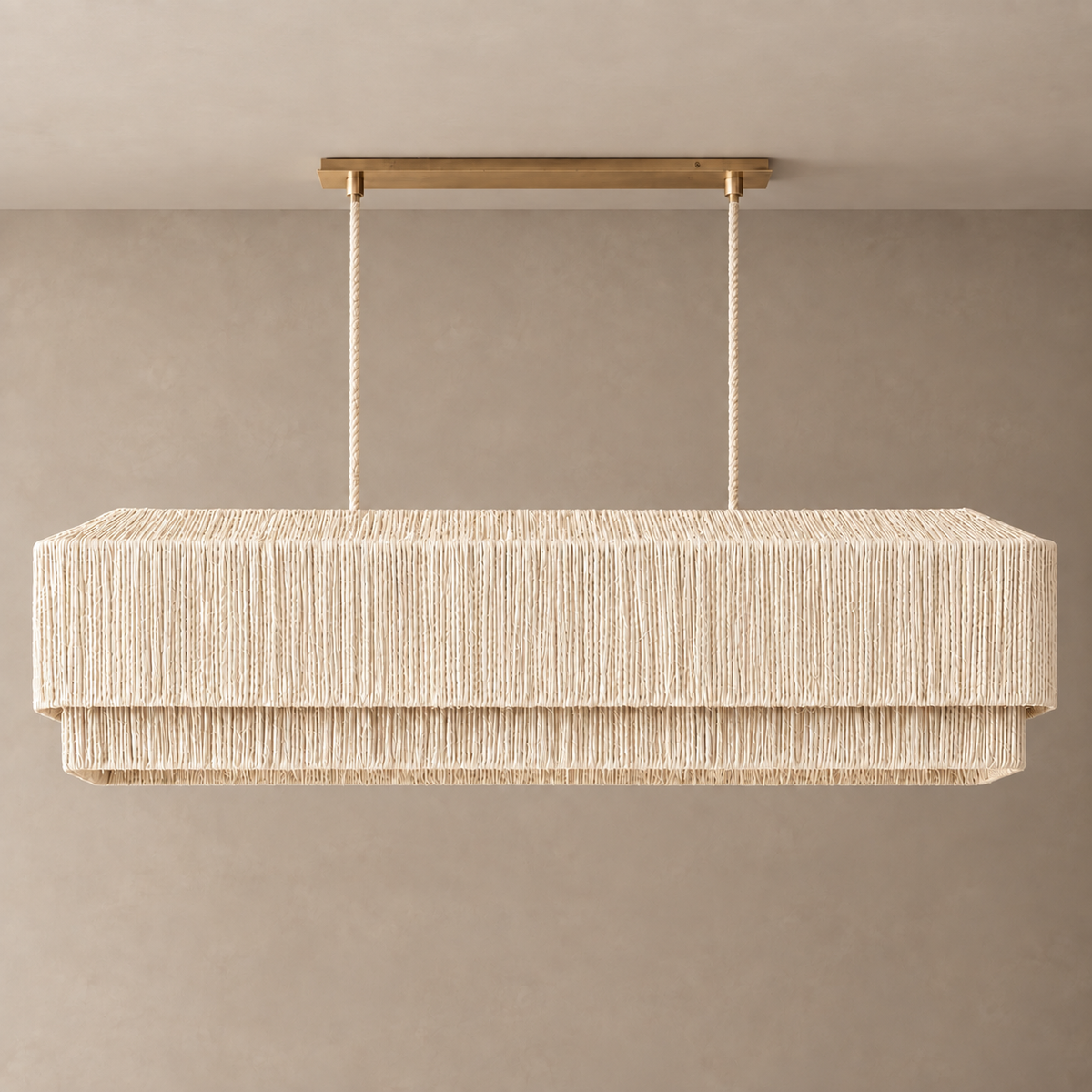
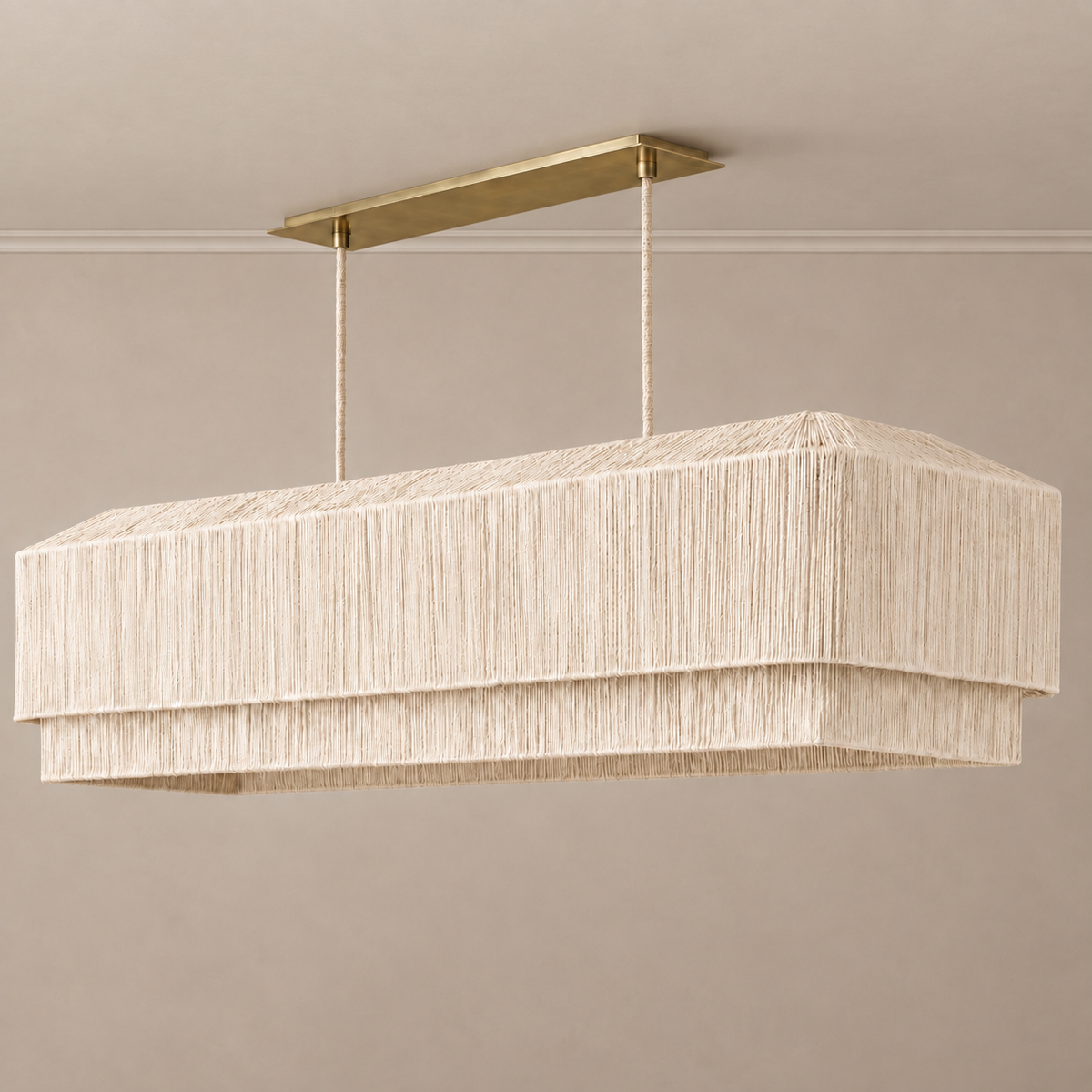
Washi paper creates an almost weightless glow. Linen adds softness and visible weave. Wood and bamboo introduce warmth and grain. Rattan and abaca add texture without heaviness. Alabaster offers a more architectural interpretation, bringing natural variation and soft translucency to minimalist rooms.
Casalola Japandi lighting
The Sabina Pendant | Linen | CLQC029 is one of the clearest examples of this approach. Natural linen is gathered into sculptural folds, allowing the texture of the fabric to remain visible even when the light is off.

For a more explicitly Japanese expression, the Washi Paper Pendant | CLAKARIE23 uses a tall paper form that works especially well in dining rooms, stair voids and calm minimalist spaces.

The Washi Paper Lantern Pendant | Round | CL03217 offers the same soft diffusion in a simpler spherical form.

How to style Japandi lighting
Choose one dominant pendant or chandelier and allow smaller wall, table and floor lights to support it. A large paper pendant can sit above an oak dining table; linen can soften a stone kitchen; alabaster can add natural variation against limewash or plaster.
For most residential Japandi interiors, warm light around 2700K to 3000K works particularly well with wood, linen, paper and natural stone. Dimming is also useful because the mood of the room should be able to shift from practical illumination to a much softer evening atmosphere.
Most importantly, leave space around the fixture. Japandi design depends as much on negative space as it does on the objects themselves.








发表评论
所有评论在发布前都会经过审核。
此站点受 hCaptcha 保护,并且 hCaptcha 隐私政策和服务条款适用。